Inspiration: Morocco post-Reconquista, transitioning from the Almohad to the Marinid dynasty, but also a general 'Arabia'
Stretching from the shimmering southern shores of the Middle Sea into the deadly majesty of the Great Desert, Al-Hilal is a land rife with mystery and conflict. Originally founded by desert tribesmen led by the man who would later be called Mazdah, Al-Hilal grew to such heights and riches that for a time it held Hespia under its sway. This all ended with the Great Crusade, which not only weakened the country but planted sedition within it. Though the nation is still powerful and rich, rebellion and hubris has slowly been eating away at it internally - threatening to consume the empire in a civil war or perhaps something worse.
Lay of the Land
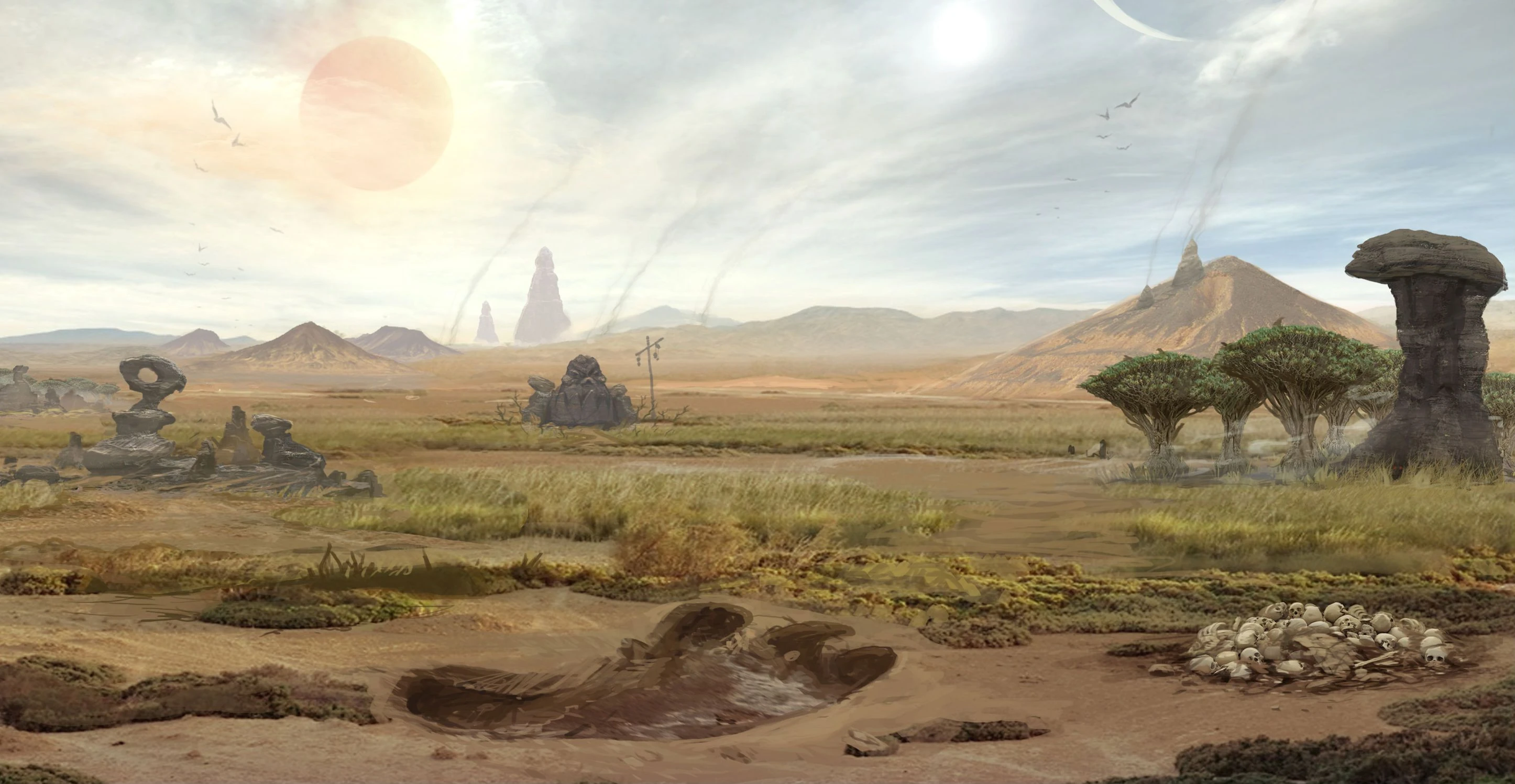
Al-Hilal overall is a dry, arid and blisteringly hot country. Most settlements lie either on the coasts of the Middle Sea or the Great Ocean where the land is fertile and trade routes are plentiful. Past the sprawling Atla Mountains, the country quickly turns into the untracked and golden Great Desert - where water is a dream outside of a few rare oasis. Many nomadic tribes live in the desert, making their living as guides and merchants, but countless beasts and bandits also hide among the dunes. Al-Hilal shares a border with Khmet, but so far the Caliph's forces have been able to pick off the few undead sent beyond the cenotaphs.
Politics and Government
Al-Hilal is a theocracy that strictly follows the faith of Mazdah, interpreting most secular and religious matters from the holy text The Word of Law. Caliph Abu Dabbus serves as both the head of state and head of the faith, administering all the land that Mazdah once conquered centuries ago. In reality he only directly rules his imperial holdings - the rest of Al-Hilal is divided between sultans, emirs and sheikhs who have varying alliances and loyalties to the Caliph. Many in the north still pledge allegiance to the Caliph and Al-Hilal, but more and more southern settlements are rebelling or declaring outright independence from the nation.
People and Culture
Many in Europa, especially in Hespia, view Al-Hilal as aggressive, war-mongering fanatics, but the opposite is more true. Al-Hilal's booming trade and centers of learning have made its peoples rich, educated, proud, determined and spiritual - in fact, in very few places will you find better hospitality than a Sultan's household, a Mazdahan temple or one of the country's universities. Unfortunately, not everything is so progressive - inequality is rampant thanks to a fairly strict class system, not to mention much of Al-Hilal's economy is built upon a massive chattel slavery trade across the Great Desert that has flourished over the centuries.
Locations
The cities of Al-Hilal are large and grand, built out of sandstone, granite and marble and replete with gardens, baths, domed palaces, resplendent archways and beautiful temples. They are built to keep the buildings cool during the blazing days and warm during the frigid nights. Many settlements within the Great Desert are just sprawling nomadic camps, able to be struck down and picked up with relative ease.
Anfa is known as a city of thieves, trade and danger. Almost anything you desire can be found for sale in the markets of Anfa, from the most innocent kettle to dark artifacts of Corruptive power. Much of the city is indirectly controlled by a large network of thieves, assassins and bandits, so illicit trade is often under constant watch by those who would prefer to keep the upper hand in all the transactions that enter Anfa.
Murrkus is the capital of Al-Hilal, located near the coast of the Great Ocean. Murrkus is full of sprawling bazaars, esteemed universities of scholastic and magickal study, beautiful temples, and of course the royal palace of the Caliph. Murrkus is also considered the most holy city in the Mazdahn faith, meaning thousands of supplicants across Tellus make pilgrimages here yearly to best honor the great prophet of their creed.
Salli is oftentimes known as the 'pirate city.' Located on the Middle Sea coast, the corsairs of Salli sail throughout the sea performing razzias (raids) on coastal Europan towns - capturing their residents to eventually sell back in the slave markets of Salli. The navies of Europa have tried to prevent these raids as best as they can, but the corsairs are too well armed and too efficient to slow down very significantly.
Ubar is a lost city supposedly deep within the Great Desert. Once grand and opulent, it's said Corruption consumed the city in fire and violence. Now Ubar shifts in and out of the Material Plane, occasionally unleashing demons or dark warriors into Al-Hilal's wilds. It's believed Ubar holds many treasures, but those explorers who have tried to approach the 'Mirage City' are either slain or disappear without a trace.
Conclusion
Sorry for the delay on this one. I've noticed the hardest part of these entries is writing the locations. They aren't difficult, just kind of more research and time consuming than general research/development on the region as a whole. As for what's next I'm not sure - might go eastward into Aswai, might do dwarves, or I might just do one or two smaller posts about the setting in general. Stay tuned!
Limitless Worlds
Showing posts with label Zweihander. Show all posts
Wednesday, September 4, 2019
Tuesday, August 27, 2019
Age of Iron: Avalon
Inspiration: British Empire ruled by elves, albeit going through an isolationist phase
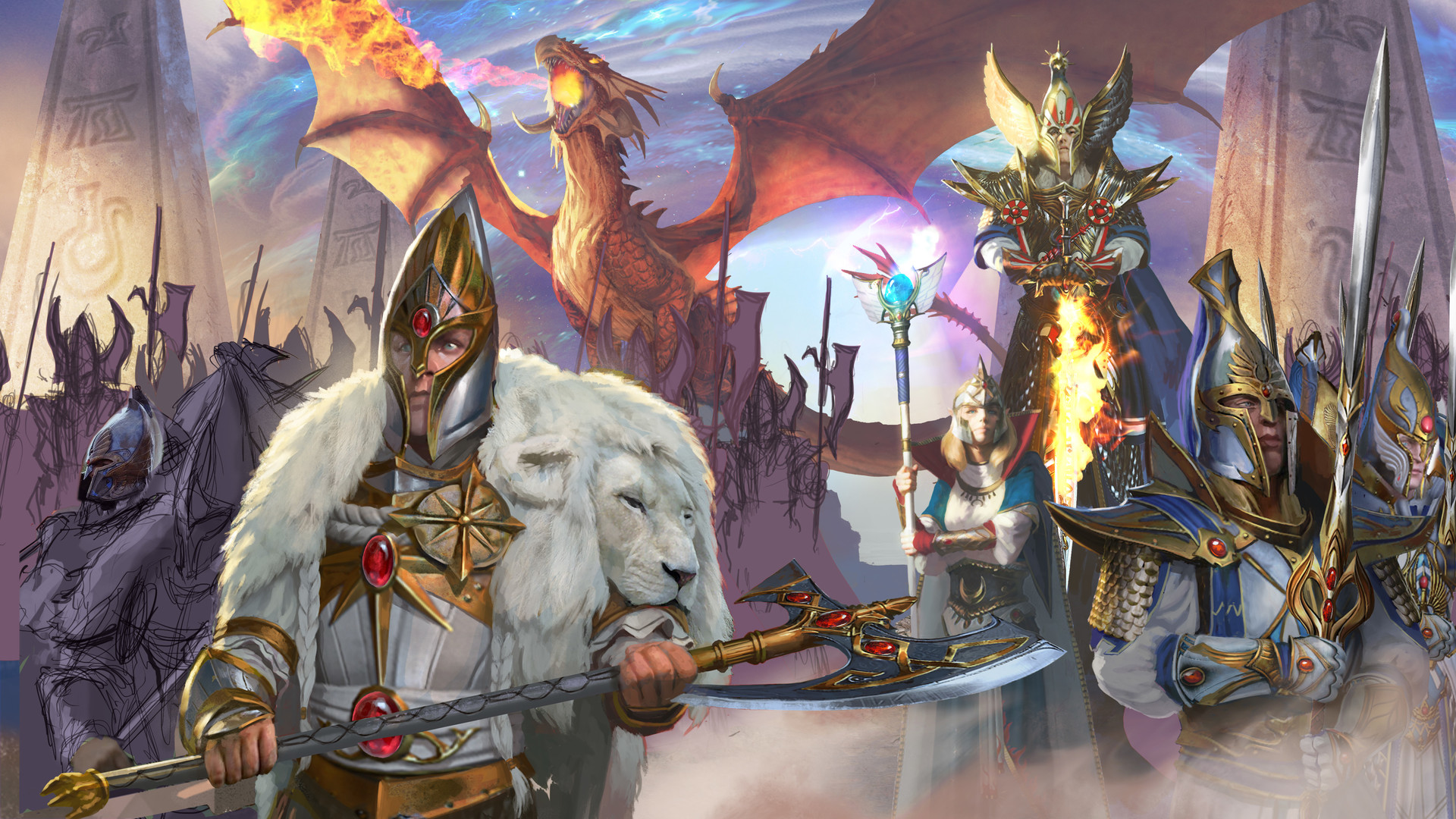
The isle of Avalon sits far off the coast of Europa, obscured to outsiders by a heavy, near-blinding mist. The ancestral homeland of all elves, it is now the sole home of the haughty and noble imperial elves. The fortunes of the elves and Avalon tend to ebb and flow with time, but their presence can always be felt around Tellus thanks to their impressive navy and culture. Since the War of Corruption, however, Avalon has become more insular by abandoning many of their colonies and overseas holdings. Combined with internal strife and a declining birth rate of unknown origin, many feel the sun may be finally setting on this once grand empire.
Lay of the Land
Avalon is a singular large island, surrounded by countless smaller barrier islands and protected from the rest of the world by a magickal mist created by the elves' most powerful mages. Though the waters approaching Avalon are rough, the island itself is ruggedly beautiful - rising highlands plunge down to sweeping moors and broad, dark forests. The island is utterly suffused with ambient magick and its effects, but Avalon's elite military has ensured the most monstrous creatures have long been eliminated. In the more remote parts of the island, creatures like dragons, unicorns and rocs thrive while they remain rare legends in the rest of Tellus.
Politics and Government
High Queen Marya and High King Charion rule over the whole of Avalon and its many imperial holdings, serving as dual leaders advised by a trusted monarch's council. They have ruled for nearly two centuries and have slowly turned the nation inward in order to best protect their people. Underneath them, the empire is divided into multiple realms each ruled by a High Lord - generals, mages and nobles who all report to the High Monarchs via the House of Lords. The High Lords often have intense rivalries with one another, but proper imperial decorum and a struggling empire prevents them from coming to blows beyond political ones.
People and Culture
Imperial elves like to think of themselves as educated, cultured, worldly and disciplined, and in essence this is true. However, this often results in Avalonians coming off as aloof, superior, privileged, arrogant and dismissive towards non-elves. While not overtly hostile, Avalon's imperial nature has gained them both rivals and enemies abroad - something the current High Monarchs are trying to repair after centuries of strife. Few imperial elves even ever have a desire to journey beyond Avalon or its colonies, but those that do tend to be more grounded, friendly and tolerant than their brethren who prefer to stay in the comfort of the island.
Locations
Avalon's cities and colonies are large and beautiful. The soaring marble architecture, wide ports and protected roadways have all been carefully tended with magick and constructed by the best engineers on Tellus. The towns are modest and humble, but even here lie beautiful churches and castles that date back centuries. Imperial elven architecture is distinct, impressive and can stand up to the very worst sieges.
Caer Lud is the capital of Avalon, as well as the empire's largest city. The port is the largest known port in all of Tellus, and goods are ferried in-and-out every day to Avalon's many colonies and trade partners. Many non-elves have immigrated to Caer Lud in hopes of improving their lives, but unfortunately most of them are treated as second-class citizens, given the most menial jobs and forced to live in the worst of the city's slums.
Caer Dine lies in Avalon's west and is strictly off-limits to nearly all residents. Once the homeland of the siabra, Caer Dine was rendered a smoking ruin after the War of Brothers. Avalon has the ruins under constant guard by soldiers and arcanists as the siabra have tried to retake their old capital multiple times. Much of the land has soured and withered thanks to the many conflicts and magickal taint of the siabra.
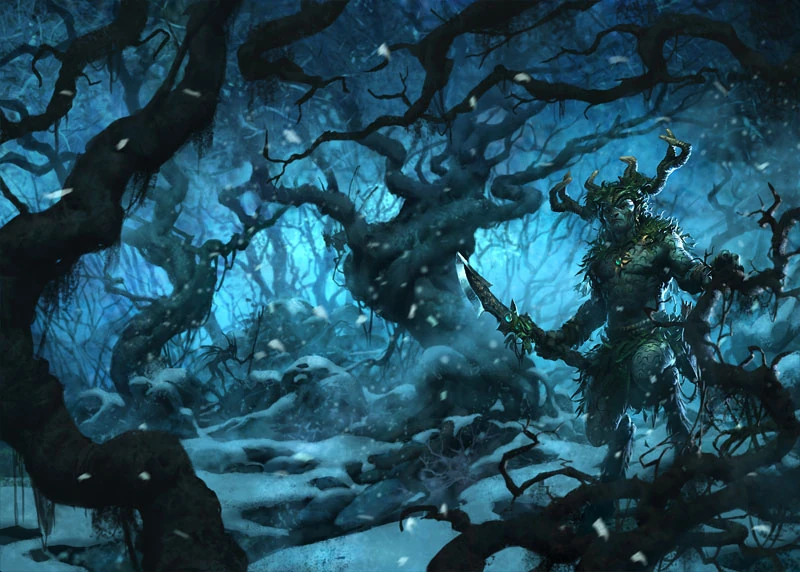
Caledon is situated far in the highlands of north Avalon. Inhabited by an ancient kith of sylvan elves, Caledon has managed to resist Avalon's suzerainty for centuries. The land surrounding the small settlement is much more untamed than the rest of the island, and its said the Caledi druids have pacts with local nephilim and bogbeasts to protect their ancient and insular way of life from being intruded upon by the imperials.
Eire is not a city, but rather a large island that supposedly warps around all of Tellus - anchoring near Avalon consistently once every century or so for a season. Those who have journeyed to Eire have never returned, but rumors abound that is the capital of the fomorians. The only proof of this is fomorian raids tend to increase when Eire is present, but this could just be conjecture from delusional and frightened fishermen.
Conclusion: Sorry for the delay, but here is Avalon - and I think it came out pretty well! I'm still kind of in the air about Caledon (aka WFRP Albion), but I'm really not sure if it NEEDS a full write-up. I just think a Celtic human faction and a Celtic elven faction just covers too much similar ground, and I'd rather just give Albion a wink and a nod rather than a whole region to itself. Not sure what's up next description wise, but I was feeling Al-Hilal.
Edit: Changed a few minor things regarding government, but nothing major.
Edit 2: A few more changes. Made Caledon into a cadre of sylvan elves rather than humans - I think the 'sylvan elves as Celts' approach is really the way to go.
Saturday, August 17, 2019
Age of Iron: Marcher Baronies
Inspirations: Frankokratia Balkans/Turkey after the Fourth Crusade but before the rise of the Ottomans
After the Vermin War and the fall of the Skrzzak Empire, the land that was once the center of Aurelian civilization was in near utter ruins. It wasn't long until settlers, crusaders and forgotten Aurelian nobility began flocking to the region, hoping to settle the long-forbidden lands and rebuild. Thus the Marcher Baronies were formed - a loose collection of states who are only unified in their desire to reignite and carry on the Aurelian culture that had nearly been forgotten. Unfortunately, conflict is still rife among the Baronies, both between the new nascent nations and the terrible things that stalk the many ruins of old Aurelia.
Lay of the Land
The Baronies straddle Europa and Aswai, located on two relatively dry and rugged peninsulas separated by the small Umbral Gulf. The peninsulas are bordered by the Middle Sea to the south and the Umbral Sea to the north, meaning farmland and fishing is relatively plentiful. The settlements of the region are heavily fortified, and outside of them much of the wilderness remains dark and dangerous - untouched by civilized hands for centuries and replete with terrible creatures and crumbling ruins. The only heavily fortified path in the region is the Silk Road, and even that isn't fully immune from raids from bandits and worse things.
Politics and Government
There is little political unification in the Baronies - each barony stands alone, and many barely rule more than a fortified town and a few surrounding acres of farmland. The 'barons' come from all walks of life - some claim they are from Aurelian royalty, others are crusader kingdoms created after the Vermin War, and still others are adventurers or exiled nobles looking to establish their own nascent states for themselves. Lygos technically has suzerainty over all the Baronies, but its more a fealty bound by tradition - King Bylbos does not have an army big enough or lands sprawling enough to enforce his will outside of the city's walls.
People and Culture
People from the Baronies are often strong, independent and determined. During the height of the Skrzzak Empire, the few non-ratmen residents of the region were subject to cruel tortures, slavery, exploitation and violence, but they kept the flame of hope burning throughout the years. Even the Baronies' modern instability has not stopped the blood of old Aurelia from flowing strong. The Baronies have also attracted both human and demihuman settlers from across Europa, Aswai and Ifri, though some 'natives' view these settlers as outsiders wishing to exploit both the generosity and weakened nature of the Aurelian successors.
Locations
Many Baronies are small, often built upon the ruins of Aurelian cities or in old crusader strongholds. The only large city in the region is Lygos, and it is there that one can catch a minor glimpse of the awe-inspiring architecture that dominated all of old Aurelia.
Lygos is one of the largest and most populace cities on all of Tellus. Though much of the city is in disrepair and has seen better days, it still remains a center of trade, knowledge and culture. Nearly every nation and ancestry possesses its own city district, meaning Lygos can also become a hotbed of intrigue and political upheaval. All of Tellus has a stake in Lygos and its future, and it shows no matter the city's condition.
Osman is a quickly growing barony on the Aswain side of the Marcher Baronies. Osman was originally a nomadic tribe from the Land of Darkness, but increased pressure from the dvergar caused them to flee west. Led by Osman the Great, this group of nomadic warriors has slowly been building up its strength over the years, with some believing they hold the intention of assaulting Lygos to take as their own.
Rodos is a large island off the coast of the Baronies currently held by the Knights of Mithra - a legendary group of crusaders who have managed to hold the island since the height of the Vermin War. The Knights have served as vigilant defenders against potential attacks from the sea, and despite their relatively small size some Knights have even journeyed west to Anahuac in hopes of expanding their reach into the new world.
Nymphaion is one of the most well-defended baronies in the whole region. Led by Baron John Karameikos III, Nymphaion lies on the edge of the Baronies and serves as the last line of defense against orx, dvergar, bandits and other foul elements who spill westward from the Barrens and Land of Darkness. Despite near constant assault, Nymphaion and its famed soldiers have always managed to stand these tests of endurance.
Conclusion
So here is the first post in the revised gazetteer for Age of Iron. I was hoping to get one of these done a day, but my schedule is just too hectic for that. Every few days is more likely, I feel. I also plan on doing more Age of Iron posts than just gazetteers - religion, timeline, calendars, etc. Hope you enjoy it, because this was pretty fun to write and I look forward to doing more.
Edit: I updated a few things with the Baronies as I wasn't fully happy with them. This is a little bit better representation of what I was going for.
Thursday, July 27, 2017
Three Hundred Years' War - Couronne, Revised
| Luis the Greater, Le Rei Soleil |
Roughly one thousand years ago after the Old Imperium collapsed under its own weight, much of the western half of that empire was without leadership. Often seen only as a breadbasket fit for peasants to work on, a minor duke known as Hugo Cour decided to take up the flag and unite these fractured people. Declaring the land he claimed as Couronne and taking the title of Le Rei Soleil, Hugo spent the rest of his life uniting the nascent kingdoms of the land into a cohesive monarchical empire - the Couronne of today, ruled by Luis the Greater. Despite struggles and conflicts with nearly all their neighbors - especially Hespia, Albain and the Gilded Imperium - Couronne still stands as one of the mightiest empires of Europa.
Recent Events
Couronne worships a regional goddess known as The Lady, but for many years they too worshiped the Old Beliefs. As worship of The Lady grew, the Couronne government started to suppress Old Believers until they reached their breaking point, striking at the unfairness in rebellion. The government and worshipers of The Lady fell upon them, igniting a bloody massacre that would turn into a full scale religious war. This period of time, known only as the Rebellions, lasted about 40 years and resulted in the deaths of over three million people, the exchange of power of Le Rei Soleil a few times, and strife throughout the nation. This was ended when the grandfather of the current Le Rei Soleil ascended the throne and made peace between the two sects. The religions are now civil, but tensions are still there.
![]() |
| A duke's castle in the Couronne countryside |
Couronne is very much a rural kingdom, but one of quite striking beauty. It is mostly composed of rolling plains and farmlands, with occasional lowlands and basins that create swampy marshes. All sorts of crops thrive here - fruits, grains, flowers and livestock are shipped from Couronne all throughout Europa. Couronne is lush with rivers - the Liger and Sequana rivers feed much of the country, and the River Rhenus serves as a natural border between Couronne and their hated Imperium neighbors. The south of the country is hilly, with parts of it bleeding into the Alpenne Range. To their west is the Great Ocean, which Luis the Greater has already set ships across in hopes to colonize the 'safer' parts of Dinetah. The climate is temperate, with long springs and mild summers.
Politics and Divisions
Couronne is divided into dukedoms, where the duke or duchess rules over their capital city and the surrounding countryside. There are between roughly 20 to 30 dukedoms at a time, their numbers changing depending on grants, fealties and the progress of the Great War. Le Rei Soleil is the 'duke' of Panam - Couronne's capital - though he rules from his palace at Semailles. The actual city of Panam is one of the largest in all of Europa, with nearly half a million residents. Couronne cities are often large and extravagant, with beautiful castles and architecture, but this is a facade - their streets are rife with urban poor, disease and banditry, and only the nobility generally gets to enjoy the fineries. Most of Couronne's population remain rural in the farmlands and marshes of the dukedoms.
| A conflict between Couronne nobles and peasants |
Couronne peoples are proud and often seen as haughty, but it's just because they know what they want. Dark hair and pronounced facial features are common, and many are slim - often from malnutrition. There is quite a large gap between the upper echelons of Couronne and the peasants. The nobility, especially the many knights and chevaliers that have defined the Couronne military, are often decadent and sordid, many flirting with Corruption. The peasantry in the cities live in squalor, decay and filth, while those in the countryside work long hours to meet demand. Couronne residents of both classes like to put on airs of superiority regardless. The Burgher class is little to non-existent, and often composed of foreigners.
Notable Locations
Panam - Panam is the capital of Couronne, and while its tall marble buildings and wide streets are appealing, it is the worst offender of the corruption in the undercurrent of Couronne. The squares and gardens are well tended, but the back alley slums are full of the poor and wretched. The nobles dance and play while the paupers are pushed into the refuse by newly bannered knights. Truly a great place to visit, but an awful one to live in.
Bordeu - Bordeu is only a town by population size, but is one of the most important settlements in all of Couronne. Nestled inbetween the Liger and Sequana, Bordeu is full of winery after winery, producing some of the finest brews in the entirety of the world. The countryside is also beautiful, with many dukes holding summer homes in the town proper. Though the winemakers faire slightly better than city peasants, its not by much.
Rodomo - Located on the River Rhenus, Rodomo was once the victim of a terrible attack at the hand of the forces of Corruption. The barbarians and foul creatures were eventually run off, but not without the city being razed. Over a few decades the town was built back up, but it was never the same - people tell tales about pained wails in the night, blood being pulled out of the well, and that the marsh is devouring the city itself. Most people give Rodomo a wide berth, and many nobles don't even acknowledge it.
(Sorry for the delay on this one! Work and freelancing has been nuts! Hopefully gonna get back into the swing of thing soon)
Monday, June 19, 2017
Three Hundred Years' War Update
Hey all, sorry I haven't done a post in a while. Work and life has caught up with me and I just needed some time to basically sort things out. Soon we'll be proceeding apace with more Three Hundred Years' War stuff.
I already have two drafts on deck: a revised Couronne and a historical Timeline. As for this update, I have a list of all the countries/factions I am going to cover, which is about 32. I've eliminated the Hobgoblin Khans basically because I don't think there is enough meat in there. I also think Siabra will take a more colonial/piratical bent than normal WH, but that's a little up in the air.
I also plan to start moving away from Europa, as I've done most of my posts about that. I might go into Asiwai (my Asia) or Kibula (my Africa) and play around in there for a while. But without further ado, here is my updated list, which I've divided into human and non-human.
Human
Hespia
Albain
Couronne
Gilded Imperium (Include halflings)
Schwarzlander
Noreg
Alpenne States
Lekhitian-Tuvian Commonwealth
Osmanli
Sonrai Sultanates
Ntotila (The new Amazon nation)
Ruthen
Gurkani
Chongzhen
Nihon
Dinetah Confederation
Non-Human
Sylvan Elves
Imperial Elves (Includes sea elves)
Siabra
Dwarves (Includes gnomes)
Duregar
Vampires
Defilers
Fey
Ogres
Chosen of Chaos
Aztlan
Fomorians
Skrzzak
Demons
Orx and Goblins
Grendels
Wednesday, May 31, 2017
Three Hundred Years' War - Hespia
| Queen Ysabel I and King Ferrando II |
Hespia had long been a conquered region. At one time or another, native Hespians were under the control of the Alpenne Empire and the Gilded Imperium, both reverting back to their small kingdoms after those empires fell. Roughly 1500 years ago, Hespia was overtaken by the Sonrai Sultanates. After centuries of rule be the Sonrai, a Hespian nobleman named Pelagius roused an army - claiming the divine favor of the Steward - and struck back against the Sonrai. Centuries of fighting continued, but native Hespians eventually drove the Sonrai completely out of the peninsula roughly 100 years ago, completing the 'Reunification'. This feat was celebrated by the marriage of Ysabel I and Ferrando II - the rulers of the two greatest kingdoms in Hespia who first united the lands under one rule.
RECENT EVENTS
Hespia is currently in the midst of what could be called a golden age. Led by King Filipe IV - who is of the same royal house as Ferdinandus II - their massive navies travel all over the world trading goods, setting up colonies in the New World and Kibula, and enforcing their sprawling borders. Art, philosophy, education and faith are at an all time high, and few can compete with the might of Hespia. That does not mean all is well - Hespia is the seat of the Inquisition, and fanaticism runs high against anyone who does not worship the Steward. Not only that, but Hespia is involved in multiple conflicts against Couronne, Albain, Schwarzlander and Osmanli pirates, not to mention their activity in the Great War. It is both a time of gold and a time of bloodshed for Hespia, and King Filipe worries for the future.
LAY OF THE LAND
| A typical 'castillo' in Hespia |
Hespia may be a large empire, but the Hespian Peninsula the actual country lays on is not overly large. Small rivers cross the country, but the largest is the western-flowing Tajo, which most major Hespian cities sit upon. Hespia also has quite a large mountain range called the Pirinioak - a short but broad range that is often served as a defensive point against Couronne. The land is fairly hilly and rocky, turning into occasional plateaus and lowlands. The land is temperate to the north and west, turning into coastal scrubs to the east and arid near-desert at the southern tip. Luckily, Hespia has managed to keep their borders secure - the forces of Corruption rarely tread here, meaning even towns and villages can thrive with only worries of other nations and the occasional Skrzzak incursion. The climate stays warm and dry, but not blistering.
POLITICS AND DIVISIONS
King Filipe IV is the current king of Hespia, and is a member of the House of Hapsburc - the same royal dynasty of Ferdinandus II. King Filipe is an aggressive king militarily, but is also known as a lover of arts and culture. Technically, Hespia is actually two separate kingdoms - the Kingdom of Castilla in the center of the country, and the Kingdom of Arago to the northeast. While both are now part of Hespia, they still have their unique attitudes and cultures. Hespia is still feudal, so provincial governors, princes and dukes rule over most of the country and its holdings, reporting back to King Filipe. While Filipe is tolerant of most things, one thing he is not tolerant of is heretics and dark religions. That's why Grand Inquisitior Antoine - the head of the Inquisition - is the second most powerful person in the country, and probably the most feared.
THE PEOPLE OF HESPIA
![]() |
| Don Marco, governor of Barna, leading a charge |
The residents of Hespia have the reputation of being passionate, excitable and motivated, though that is not everyone in the country. Their skin is the color of olives and their hair as dark as night, while their faces are sharp and almost aquiline. Hespia still retains remnants of its occupation by the Sonrai Sultanates, with more southern cities possessing Sonrai architecture, culture and faith. Honor is also important in Hespia, whether it be through dancing, sword dueling or bull-fighting, Hespians tend to be larger than life and their cities reflect that. Rural Hespians have a fairly good standard of living compared to most of Europa - they often fish or farm, and tend to live long and with pride in the country.
NOTABLE LOCATIONS
Tole - Both the capital of Castilla and Hespia as a whole, Tole is truly a multicultural city located at the mouth of the Tajo River. The remnants of Hespia, Alpenne, the Gilded Imperium and the Sonrai Sultantes are all seen in the architecture and culture on this city on a hill. King Filipe holds his court here, as well does Grand Inquisitor Antoine. Though all people are welcome technically, those who do not worship the Steward are advised to watch their backs. Despite this, Tole still serves as the major port of all of Hespia.
Barna - Nestled in the heart of the Pirinioak Mountains, Barna is an old and embattled city, as well as the capital of Arago. It has long served as a defensive choke-point against Couronne and the few Goblin clans that roam the Pirinioak. Barna isn't a grim place though - Hespians here are just as vibrant as other parts of the empire, though they are often quicker to conflict. In addition to their military prowess, Barna produces some of the best wine in all of Hespia.
Ochuse - Though Hespia has sent out multiple of their conquistadores - combinations of explorers and soldiers - to found colonies in the New World or Kibula, few have succeeded. One that succeeded was Tristan de Luna who founded the colony of Ochuse in southeast Dinetah. Though a prosperous trading post for Hespia, Ochuse has found itself embattled on all sides by the Dinetah Confederation, the Aztlan temple-cities and Siabra raiders. King Filipe is considering abandoning the colony if things don't improve.
Friday, May 26, 2017
Three Hundred Years' War - Ruthen
| A procession in Qazan for a local boyar |
Ruthen was originally formed of disparate peoples - ancestors of the Osmanli, the Gilded Imperium and the Noreg were all wanderers and allied with native Ruthenians into the hard-scrabble nation of Rut'. The nation rose to prominence, but roughly 2000 years ago was overthrown by Hobgoblin Khans from the Tsagadaina Steppes who ruled over the land for centuries. Eventually, a man known as Ivaan rose up and united the remnants of Rut' and struck back against the Khans. Their subsequent victory caused the formation of the Tsardom of Ruthen, and Ivaan 'the Great' was crowned their first Tsar.
RECENT EVENTS
Despite its size and power, few people from either Europa or Asiwai journey to Ruthen, so few know of their struggles. When Ivaan's grandson, Ivaan II, ascended the throne, he was unstable and mentally disturbed. He sent Ruthen's armies out to expand and conquer in near endless wars - mainly against Noreg and the Lekhitian-Tuvian Commonwealth - and he created a 'realm of the Tsar', which was an administrative district he owned that consolidated all the wealthy boyars of the country, leaving most of the country poor and starving. After his death, a line of pretenders tried to adjudicate to the throne and Ruthen was thrown into dissension, rebellion and civil war backed by foreign powers. This time became known as the "Time of Troubles," and only ended roughly 30 years ago when Tsar Mikhail rose to power after being elected by a congress of Ruthen nobles. Though Ruthen has calmed down, Tsar Mikhail is still struggling to get the weary nation back on its feet.
LAY OF THE LAND
Ruthen is a diverse and sprawling land. Two major rivers run through it - the Dnepr to the west, which forms a natural border with The Lekhitian-Tuvian Commonwealth; and the Bosra, which is a main artery that runs from the massive Qazan Lake across the north of the country, dividing it from Noreg. The lands to the west are mostly deciduous forest that bleed into taiga the further north you go, and rising lands that turn into steppes to the south. Ruthen is divided from Asiwai by the Uralskiye Mountains, a northern branch of the Ximalayas. Large cities are few and far between - Moskva, Qazan and Novgor all lie along the Bosra at different intervals. The rest of the country is small villages or towns in their oblasts, and vast tracks of beast-haunted lands. The land remains cold year-round throughout, but can plummet to freezing at the height of winter.
POLITICS AND DIVISIONS
Ruthen is ruled over by the Tsar of All Ruthen, Mikhail Romanvy, and he has total autocratic power - though Tsar Mikhail is considered a kind and understanding tsar. The country is divided into dozens of oblasts, each ruled by a prince, duke, baron or boyar - collectively called dvoryanstavo. Despite the years of the Time of Troubles, Ruthen government maintained relatively strong due to the large amount of bureaucracy in it. That said, their government is rather strict - few people are allowed to migrate from their residencies, and serfdom is not only encouraged, but any who escaped it are considered fugitives. This leads to a strong central state and sparse outlands, which could be a boon as Ruthen is surrounded by enemies such as the Arktos Wastes, Noreg, Lekhitian-Tuvian Commonwealth and Tsagadaina Steppes.
![]() |
| A group of cossacks reading a letter from Osmanli |
Ruthenians are a diverse peoples. Though they can trace their heritage across most of Europa, they have interbred into a distinct people - broad shouldered, dark haired and stern faced, but possessing a jovial spirit and a true feeling of kinship. Large portions of Ruthen are still rural, so many are either farmers or nomads, but more and more are starting to migrate to the cities. A unique peoples of Ruthen is that of the cossack - groups of autonomous 'mercenaries' that sell their sword for coin and glory. Tsar Mikhail has hired many cossacks to patrol the borders of Ruthen for any threats, and these soldiers are willing, able and more than ready.
NOTABLE LOCATIONS
Moskva - The capital of Ruthen and the largest city in the country with over 150,000 people living here. The city is heavily fortified - surrounded by three walls, possessing numerous citadels called kremlins, and distinctive onion-domed temples with few weak points. Perhaps that's why in spite of multiple invasions and occupations, Moskva still stands proud. Here is also the imperial palace of Tsar Mikhail, one of the most imposing in all Europa.
Qazan - Qazan was once its own nation, conquered by Ivaan II not long before his death. This meant the city was in ruins and had a dwindling population. Over the years it has been built back up and is now a bustling trade port, trading by both land and sea to places such as Osmanli, Noreg and the Gilded Imperium. Still, Qazan is a remnant of what it once was, and its native nomad residents long for their old state.
Novgor - Novgor has always had a rebellious streak, a sprawling city often inhabited by cossacks and nomads who would rather break off into a new nation. However, after a terrible raid from the forces of Corruption, Novgor is considered cursed. While people still live here, it is said voices howl at night and babes here quickly turn to Grendels. Tsar Mikhail always has one eye fixed on this city, in worries it will be raided again.
Wednesday, May 24, 2017
Three Hundred Years' War - World at Large and Revisions
I've made some changes in how the Three Hundred Years' War setting will play out. Basically, due to work and real life, I don't have enough time to devote to large amounts of research and writing. Instead, I'm going to go to a structured, broad strokes setting like early WFRP did.
To give you a taste of that, below I have listed every country in the Three Hundred Years' War setting and my intentions for it. Below that, I have put the new format that countries will be described in - once again, similar to WFRP 1e. My goal is to hopefully fit each country on a page or two. Also note that these are only for the nations of the setting - I'll have other sections on religion, magic, and history as well.
Europa (Europe)
Albain: Based on England after the Union of the Crowns and in the height of the Wars of the Three Kingdoms. Unlike WH, the pre-Roman Britain will be restricted to 'Scotland'.
Couronne: Based on France after the French Wars of Religion, especially the Huguenot Wars. Will be much more 'traditional' France rather than Arthurian.
Gilded Imperium: Based on the Holy Roman Empire under Ferdinand II, but with a lot of focus on the Protestant Reformation and the subsequent Thirty Years' War - or its fantasy analogue. Will most likely have a large focus like the Empire did. This will also contain the Sylvania/Transylvania analogue
Noreg: Based on an anachronistic Kalmar Union, set after the Kalmar War with parts of Noreg (aka Sweden) trying to be independent. Sweden will keep the Norsca theme of raiders, while the others will be a more proper 'kingdom.'
Alpenne States: Based on Italy after it was basically split up between Spain and France, with only a few states like Venice and the Papal States. The Papal States will become the religious center of Europa instead of the Gilded Imperium - not a big surprise.
Schwarzlander: Based on the Dutch Republic, it is in the midst of the Eight Years' War for its independence. It'll be a trade state like the Wasteland, but they will have a much more independent streak
Lekhitian-Tuvian Commonwealth: Based on the Polish-Lithuanian Commonwealth, this is my Border Princes analogue. Strangely enough the Thirty Years' War was during the PLC Golden Age, so they'll kind of be a relatively peaceful place aside from internal skirmishing - mainly the Khemelnytskyi Uprisings.
Ruthen: Based on the Russian Tsardom, this will be post-Time of Troubles and the beginning of the legendary Romanovs. It'll be painted as a country trying to get back on its feet, with a little less mysticism than Kislev - though ice magick will still be a thing.
Hespia: Based on Spain during the Habsburgs, Hespia will play a much larger role in the global stage than Estalia did. Not only will they be a center of exploration and trade, but also the seat of the Inquisition (which no one expects). Spain was basically the second most powerful empire in Europe at the time, so I think it deserves to shine.
Non-Humans: Wood Elves will be based on Hungary, High Elves on Portugal, Dwarves on Romania, Halflings on Austria, Gnomes on Romani
Untamed Lands: Eireann is obviously supposed to represent the Kingdom of Ireland, a perfect home for the Fey.
Kibula (Africa)
Osmanli: Based on the Ottoman Empire, this is trying to move away from the 'Islamic Golden Age' weird pastiche that Araby is into the sprawling Turkic empire. This will be set during the Era of Transformation, which saw the Ottomans turn from expansionists into kind of a more bureaucratic state who upheld Islam. Also there will for sure be Barbary pirates
Sonrai Sultanates: A 'new' country, this is basically going to be the remnants of Morocco and the Songhai Empire after both have fallen. They've descended into a bunch of squabbling multiethnic city-states who either fight against each other or try to protect their borders from the undead. This is an attempt to separate the African parts of Araby into their own thing.
Untamed Lands: Bala-Khana is my Badlands analogue, and is supposed to be a mix of Saudi nomads, the Pushtans and the Uzbeks. The Kufu Expanse (and Habesha) is based on Ethiopia, while the Heart of Kibula is supposed to be my Amazon-filled Southlands by way of the Kongolese. The Plateau of Iram is supposed to be Persia, with the Duergar representing the Safavids.
Asiwai (Asia)
Gurkani: Based on Mughal Empire India, specifically under the reign of Shah Jahan (aka the person who built the Taj Mahal). Mughal India is a very interesting time period, as it was both flourishing and under great strife. I hope starting with this I can dissolve some of the weird mysticism that Warhammer has in their Eastern Lands for something more grounded.
Chongzhen: Based on Qing China, Chongzhen will about the transfer of the Ming Dynasty to the Qing Dynasty - quite a messy time in Chinese history.
Nihon: Based on Edo Japan, also knwon as the time of samurai, daimyo, ninjas and isolationism. It'll take place after the Sakoku Edict - which basically locked down the country and didn't allow any Japanese citizen to enter or leave.
Untamed Lands: Qingzang Highlands is my Ogre Kingdoms and based on Tibet. Tsagadaina Steppes are Mongolia and the Goblin khans. Chosun Peninsula is Joseon Korea but ruled by the Skrzzak, and the Kerajaan Archipelago is the Majapahit Empire but with more than a hint of Lovecraft and Rl'yeh.
New World (North and South America)
Dinetah Confederation: Much like how Africa never got any consideration in Oldhammer, neither did Native American tribes. My solution to this is the Dinetah Confederation - an association of Native tribes trying to fight back against the Siabra to the north and the Aztlan to the south. They will be based on the five largest Native tribes - Chippewa, Sioux, Cherokee, Navajo and various Latin tribes.
Untamed Lands: Dinetah is supposed to represent colonial America in its imperialism, while Anahuac is the Aztec Triple Alliance during its decline.
New Layout
Here is the new layout for each nation. I am going to go back and revise Couronne in a new post with this format, and then I'll have new stuff in this format from now on.
XXX (Name of country)
Recent Events
Lay of the Land
Politics and Divisions
The People of XXX
Notable Locations
Thursday, May 18, 2017
Three Hundred Years' War - The Untamed Lands
THE UNTAMED LANDS
Beyond the borders of the Gilded Imperium, Chongzhen, Osmanli or one of the other human nations, the world bleeds into dark wilderness where dangerous beings lurk. True, in these places are nascent kingdoms and duchies of humanity trying to carve out a scrabbled existence, but the forces of Corruption, wild beasts and foul Mutants truly hold dominion. These Untamed Lands, as they are called, are ancient and dangerous - but they also hold mystery unknown and treasure unimaginable. Those brave enough to set foot in them rarely come back alive, and those that do are irrevocably changed.
ANAHUAC
Across the Great Ocean lies two massive continents which have only just been 'discovered' - though they have long been occupied. The southernmost continent is known as Anahuac. A land of deep swamps and even deeper jungles, it is believed that it and Kibula used to have once been one single landmass.
Within these dark jungles are the remains of the Aztlan, the chosen children of the Ancient Ones who once seeded our World. Though their empire was once grand and opulent, a terrible war with the Skrzzak has left their temple-cities in ruins, their Tlalocs in prophetic stupors and their power waning. Still they live, warring with Corruption and capturing human slaves to drain their blood into their Tlaloc's rejuvenating pools.
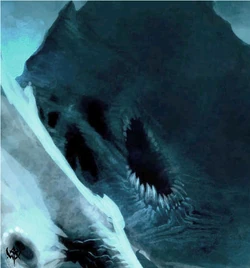
ARKTOS WASTESFar to the north at the crown of the world, the land flattens into barren cold nothingness. Here are the Arktos Wastes, a landscape of glacial mountains, vast tundras, a midnight sun and howling winds. These lands connect Dinetah, Europa and Asiwai with their bitter cold. Another Arktos Wastes lies far to the south, but that is isolated by oceanic waters.
These Wastes are the most cursed place in the World, as it is here yawns the Rift that leads to the Abyss, altering the landscape with dark magicks. Pouring out from it are demons and beasts of all sorts, and it is here the Abyssal Princes of Chaos gather their hosts to assault the world. Constantly battling for dominance with their armies, they have recently announced their choosing of an Usher, a Bringer of the End. Now, the new Usher journeys the Wastes, rallying troops and tribes for an assault on the World below.
Pushed to the fringes of civilizations lies the stark land of Bala-Khana. Bordered to the east by the Aswiai Sea and surrounded on all other sides by the Osmanli Empire, the veldts of Bala-Khana are stark and vast. Made of mostly rocky veldts, scrub grasslands, muddy rivers and gnarled trees, it is an inhospitable place that is filled with peril.
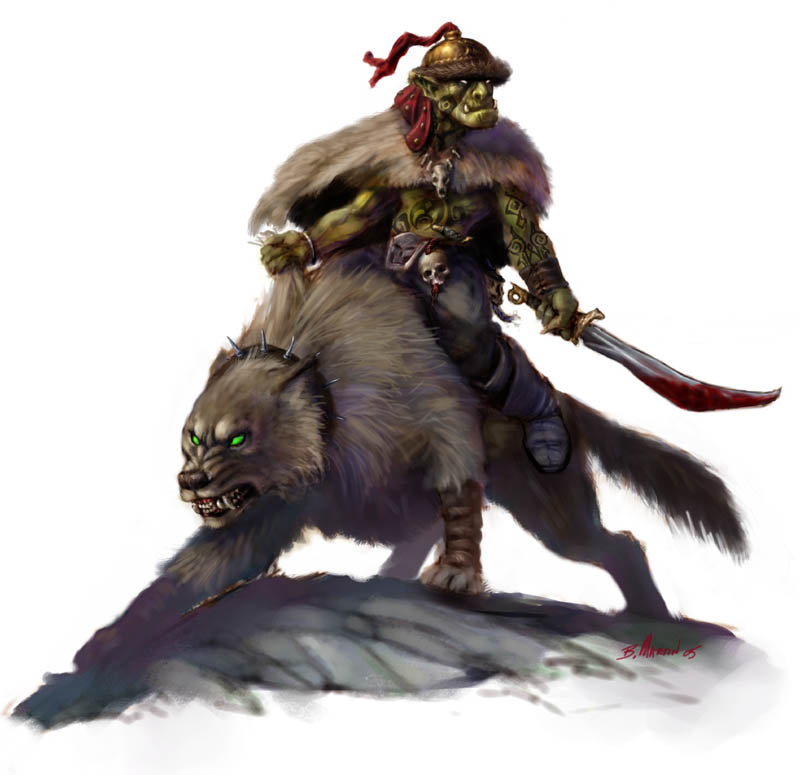
Though nomadic humans do dwell in Bala-Khana, the overwhelming majority of residents are Orx and Goblins. Spread out among countless WAAAR! Parties and Goblin tribes who have gained a foothold since the Mutant Wars, they fight constantly against each other or attempt to invade Osmanli or any standing Dwarf Holds. Luckily they have been managed to be pushed back to this relatively cut-off piece of land, but it seems more and more of these Mutant menaces arrive in the plains of Bala-Khana day by day.
CHOSUN PENINSULALocated off the southern coast of Chongzhen, the Chosun Peninsula is a land of misty rainforests, wide swamps and soaring highlands. Isolated by mountains from Chongzhen and by the Aswiai Sea from nearly every place else, on first glance it is seen as nothing more than a untamed wilderness. Upon closer inspect, a much different story is told.
The Chosun Peninsula was once ruled by a spanning human empire whose name has been lost to time. This was until one day, the mysterious Skrzzak began appearing in its sewers and warrens. Over a manner of months, the Skrzzak rapidly multiplied, and with their sickness and might drove the humans out. Now the peninsula is overrun by Skrzzak Kabals, mining the hills and and forests for the copious amounts of buried Wytchstone and spreading their disease. The peninsula also contains the city of Gyeongbukgong: the most densely populated city in the World and the neutral meeting ground of all Broodmothers, making it the 'capital' of the Great Warren.
DINETAHAcross the expanse of the Great Ocean lies two continents that are only now being explored - though they have long been occupied. The northernmost continent is known as Dinetah. A harsh and massive land, the north is covered in tundras and glaciers, before eventually bleeding into mountainous pine forests and harsh desert to the south.
Dinetah is now a haunted land ruled by the cruel Siabra. After the Elven Civil War, the Siabra journeyed west to Dinetah's shores. Once there they built up their massive spire cities, laid waste to the coastlines, and enslaved any human they could find upon the land. Even now their wretched empire is built upon the backs of slave labor, while they lounge in decadence and raid Europa for slaves and supplies all other times.
EIREANN
Of the coast of Europa and only a half day's sail from Albain is the small island of Eireann. Thought to have once been connected to Albain by a land bridge, Eireann is mostly composed of fens, lowlands, dark forests and rolling hills. No humans live here and it would seem unremarkable, but these woods hold dark secrets.
Within this green isle is the largest Coterie of Fey, both Seelie and Unseelie, in the entire World. Several times, large hosts of the Fey have tried to make expeditions onto the mainland, but the forces of Albain have a blockade around the island to strike down any incursions. Few who have ever set foot upon Eireann are ever seen again, their skulls most likely adorning the belts of the cruel and otherworldly Fey. In fact, it is believed that Eireann may be a direct portal to the Black Lodge and the terrors it holds.
Between the Qafqaz Mountains on the edge of Europa and the majestic Ximalaya Mountains of Aswiai lies the dreaded Plateau of Iram. Once a relatively barren and featureless land, the disaster of the Great Eruption altered the landscape forever. Now the Plateau is covered in a permanent layer of smoke and ash, as the land is rent with steaming rifts, belching volcanoes, tar pits and rivers of oil. Nothing grows in this volcanic land, and breathing is difficult.
These deplorable lands writhe with savage life, however. Orx and Goblins of all stripes clash against each other in endless war, while Grendels dwell within dark caves and valleys. Here is also the dreaded civilization of the Duergar, separated from the bulk of Dwarven civilization after the Great Eruption. They have since succumbed to Corruption inside their massive ziggurats - spending their days either mining for gems, gold and oil to appease their Hell Furnace god, or gearing up their demon-powered war machines for assaults on civilized lands.
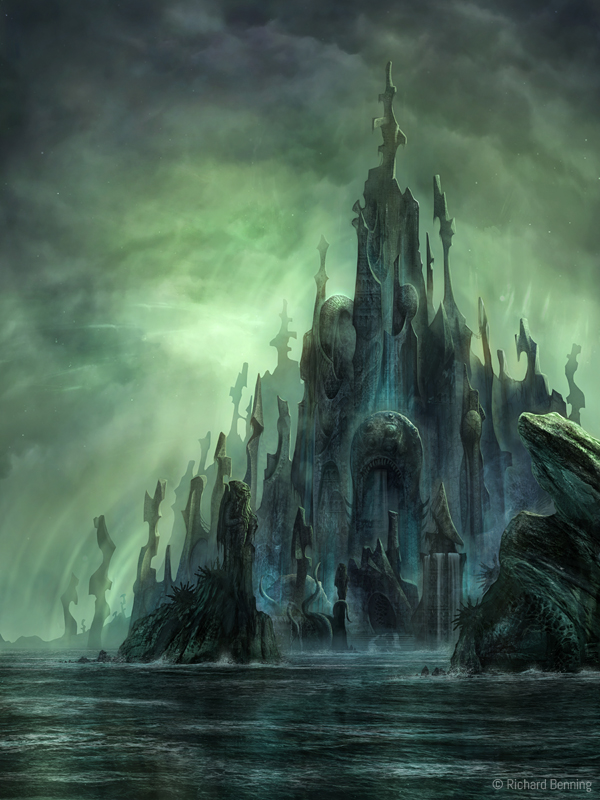
KERAJAAN ARCHIPELAGOThe Kerajaan Archipelago is set in the Aswiai Sea, though part of it is also a peninsula attached to the southern end of Chongzhen. Composed of mostly tropical islands and small tributaries, it had long served as a passage of trade from Europa to Aswiai. These islands had remained a wilderness for the longest time, up until the Ogre homelands were destroyed centuries ago.
Now, those Ogres who made a pact with the Witch-Queen to survive dwell in Kerajaan, mutated into the demon-spawned Fomorians. In the depths of the ocean, along the coasts and jutting from atolls are the mind-warping non-Euclidean cities of the Fomorians, where they spend their days worshiping their Crones. When not absorbed in their manic chants, they ply the waterways to ravage ships for treasure, supplies and new captives to breed with. Though other Covens have appeared throughout the oceans of the World, the Kerajaan Archipelago has the greatest concentration.
HEART OF KIBULAThe Heart of Kibula makes up the bulk of the mainland of the continent of Kibula. South of the Expanse of Kufu, the Heart is a dense land full of steaming jungles, raging rivers, soaring mountains and dangerous beasts. It is also a land brimming of natural resources, and has thus garnered the attention of Europa for potential exploitation.
The residents of Kibula are the Amazonian warrior-women, and they are not about to be exploited by 'northerners.' They have spent centuries building up their civilization after their escape from the claws of the Aztlan and will not see it fall to ruin. They regularly mount raids against colonials, deserted pirates and the occasional incursion of Grendel or Orx. Their civilization is a secret, and they intend to keep it as such.
THE KUFU EXPANSE
South of the borders of Osmanli and north of the borders of the Heart of Kibula are the dusty and windswept dunes of the Kufu Expanse. Extending across almost the entire length of northern Kibula, the Expanse is a vast desert whose winds whip like razors, scoring skin and the countless ruins rising out of the sand.
The Kufu Expanse once held the Habesha Empire, believed to be the first true human civilization. However, a being known as the Gilded Pharaoh placed a curse on the lands, turning the entire population of Habesha into undead and ascending to Daemonhood. Now the Kufu Expanse is ruled by decadent Defilers who rally up undead armies from their tomb-cities in order to strike against the lands of Man. The black obelisks and pyramids are tempting though, as they are said to hold massive treasures.
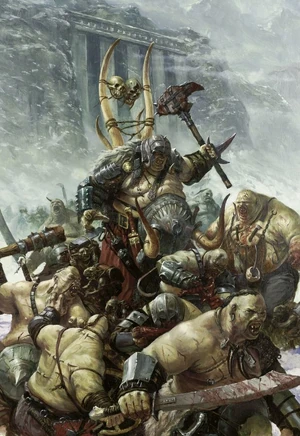
QINGZANG HIGHLANDSIn the heart of the Ximalaya Mountains lies an elvated and vast plateau known as the Qingzang Highlands. Containing some of the highest mountains in the World, it is a land of bitter cold and savage beauty. It has remained untouched for centuries due to its height and isolation from the surrounding landscape.
Deep within the heart of the Highlands lie the remnants of the Ogres, living among petty kingdoms ever since their original homelands were destroyed centuries ago. They constantly feud over food and land, but this may be due to years of conflict with the Asiwai lands surrounding them. They often also raid the Great Eastern Road that serves as a trade artery between Europa, Kibula and Asiwai, so the kingdoms are despised by humanity. There are many massive ruins within the Highlands, as they were also once the home of the Nephilim before their exile.
TSAGADAINA STEPPES
North past the heights of the Ximalaya Mountains and only a day or two from the Arktos Wastes lies the Tsagadaina Steppes. A land of rolling plains, grasslands and bitter cold hills, it is believed this was the birth place of the noble horse. The land has little to offer except grass and stone, so few humans dwell here.
The vast majority of the Steppes are ruled by Hobgoblins and their goblin tribes. Divided between multiple Khans who claim to be the most powerful Hobgoblin, they spend their days launching raids to the south to attempt to take Chongzhen - a land they see as their birth right. This conflict has been going on for so long that Chongzhen has constructed a massive wall to their north to block off the advancing hordes. Even with this, the assaults continue almost nonstop.
OUTRO
Sorry for not having a post for a handful of days, as real world work has been swamping me. I decided to take a different approach here that will kind of forecast how I'm taking the Three Hundred Years' War. Much like the old version of WFRP 1e, I'm leaving these 'untamed lands' with broad strokes and mystery for a GM to fill on their own. That doesn't mean these places will not go undescribed - instead of giving them full 'nation' treatments, they'll be expounded upon in a sizable timeline, also similar to WFRP 1e. I am also thinking of going back and revising the layout of some posts, but I want to do a 'new' nation first before I go altering things rashly. Anyway, hope you enjoy this one!
Thursday, May 11, 2017
Three Hundred Years' War - Dwarven Holds and Vechiul Regat
![]() |
| Bucuresti, the old dwarven capital of Vechiul Regat |
Not long after the Rifts first appeared in the Arktos Wastes, migrating up from the grasslands of Kibula were the Dwarves. A short, squat, and taciturn people, they migrated northward in search for a permanent home - as well as to escape the swarms of Goblins and Orx that seemed to explode after Corruption's inception. Eventually, they stumbled upon what is now known as the Stara Mountains. They found it to be a good defensible position against their hated Mutant enemies, as well as a land of mineral resources, so they began their settlement.
What started as small villages in caves eventually turned into mining cities and towns among the stoney heights of the Staras. However, they were still beset on all sides by their enemies, and it seemed every village they built soon fell. This was until they allied with the massive civilization of the Elves, who had journeyed east during their exploration of the World.
The two found allies in each other - the Elves helped provide military aid and their powerful magics, while Dwarves provided their craftsmanship and natural resources. As time went on, however, the Elves became more demanding and gave little back to the Dwarves. Eventually the Dwarves united under a charismatic craftsman named Basarab, who revolted against the Elves and caused the century long War of Broken Hammers between them. When the dust settled, the Elves (fractured by their own civil war) retreated, leaving the Dwarves of the Stara Mountains independent, but depleted. With exhausted fanfare, Basarab declared himself the first Voivoide of Vechiul Regat - the Dwarven kingdom.
![]() |
| Lands affected by the Great Eruption |
Worried for his people, Voivoide Basarab began to make sweeping changes to his new empire in order to keep their strength without the help of the Elves over the 200 years of his reign. Unfortunately, most of these ideas were misguided, and the era is commonly referred to by Dwarven scholars as the Age of Strife.
One of the first things Basarab did was enslave a race of beings local to the Stara Mountains, who called themselves Gnomes. These Gnomes had awesome mechanical prowess, and were forced to create machinery that even today has not found an equal. Dwarves didn't abuse the Gnomes as much as they could, but they still lived in squalor for no pay and little prospects. Basarab then declared that every Dwarven Hold - whether they be small or large - be ruled by a noble called a Boyar. While a seemingly innocuous idea, Basarab installed his children in all the positions, leading to rivalries and jealousy.
This all came to a head when a long-extinct volcano near Bucuresti exploded - the resulting Great Eruption left Basarab dead, a cloud of darkness and ash permanently covering the desert of Iram, a gullet opening to the Great Warren of the Skrzzak and an in-roads for Orx to better assault Vechiul Regat. The Boyars began civil infighting on who would next be Voivoide, and it seemed as if the Dwarves were nearing extinction.
![]() |
| The Siege of Hateg, a major turning point in the Mutant Wars |
While Mihai was crowned by Karolus as the new Voivoide, he was wise enough to know the Dwarven kingdom could never fully recover from the Great Eruption and the Mutant Wars - many Holds had fallen, countless Dwarves had already migrated into safer mountains west and north, and Bucuresti needed massive repairs. As a final act, Mihai the Brave freed the Gnomes from slavery before declaring that he was Voivoide in only name - the glory of Vechiul Regat now long gone.
| A Dwarven Boyar headed to war |
Though Bucuresti still thrives within the Stara Mountains despite the ages, few full Dwarven Holds are found in Stara anymore. Some have migrated west to the Alpennes, others have settled in the Gilded Imperium, and others have travelled north to Noreg. The largest Holds are massive underground cities - story-tall vaulted ceilings, massive causeways and buildings of stone, and architecture that dates back thousands of years. The smallest Holds are little more than mining camps, with only a dozen families within them.
Each Hold is ruled by a Boyar, while the nobility under them are called Kynatz. All Boyars still pay tribute and are technically under the authority of the Voivoide - currently known as Grigore - even though Vechiul Regat has no actual borders any longer. The Holds usually contain one large extended Clan, which the Boyar is usually the patriarch or matriarch. Many Holds also contain populations of Gnomes - even after their release, they didn't have really any place to go. As a result, they still suffer in their industrial jobs and slog in slums, but now they get marginal pay instead of none.
There are also three other important positions in a Dwarf Hold besides a Boyar - that of the Rune Master, Grudge Keeper and Master Engineer. The Rune Master oversees the forging of the mystical runes in many Dwarven constructs; the Grudge Keeper is a historian who records every sleight against a Clan in their enormous tomes; and the Master Engineer monitors the steamwork and industry of the Clan. These three are found in nearly every Hold and are close advisers to the Boyar.
![]() |
| The Vechiul Regat Armata strides headlong to war |
Their nobility are often stuck in their ways, dreaming of past glories rather than improving the Dwarves as a whole. True their might is great, their runes strong and their technology imposing, but Dwarf culture has been stagnating for centuries. The Holds are starting to fall apart, and their age is near over. Now they are embroiled in the Great War, an ally to their long-time companions in the Gilded Imperium, but it is unknown how long they can serve as a bulwark.
When any one Dwarven Hold marches to war, especially the imperial army of the Vechiul Regat Armata, it is an impressive sight. Slayers with blood-red mohawks stand side-by-side with meteoric iron wearing flamethrower wielders. Tunnel fighters, rune thanes, and the powerful gyrocopters and cannons of Gnomish make leave the Dwarves with one of the most powerful armies when they can gather up their numbers.
OUTRO
Yowch, quite a lengthy one for the Dwarves (and Gnomes). Obviously I took a lot of hints from WFRP 1e Dwarves, but I inserted a hearty amount of Romanian history in there - especially focused on Wallachia. I'm also starting to build up timelines here - the War of Broken Hammers, the Elven Civil War, the Age of Strife, the Great Eruption, the Mutant Wars, etc. I'm also shying away from magic and religion unless it is very important - both of those will get their own posts going in depth. I'll probably head into another Europan country next - I'm leaning towards Ruthen or Hespia.
Wednesday, May 10, 2017
Three Hundred Years' War - Couronne
![]() |
| The city of Gascon near the Hespia border |
Roughly one thousand years ago after the Old Imperium collapsed under its own weight, much of the western half of that empire was without leadership. Often seen only as a breadbasket fit for peasants to work on, a minor duke known as Hugo Cour decided to take up the flag and unite these fractured people. Declaring the land he claimed as Couronne and taking the title of Le Rei Soleil, Hugo spent the rest of his life trying to unite the nascent kingdoms of the land into a cohesive monarchal empire.
After Cour's death, succession carried down his bloodline. Though the lands around Le Rei Soleil's palace of Semailles respected and followed his rule, many outlying territories didn't recognize it. This led to conflicts with Albain trying to claim the Couronnian throne - which Couronne won - and attempted expansion into The Alpenne States - which Couronne lost via Hespia. Since then, Couronne has experienced a Renaissance - literally. They've expanded their borders significantly, art has exploded in quality, and the current Le Rei Soleil - Luis the Greater - has consildated power. For the past few hundred years, however, they have been been at a stalemate with their Imperium rivals and internal struggles, and there is little sign of stopping.
THE MORGAINE REBELLIONS
| The Voliex Massacre |
For a while, the nobility accepted this but suppressed many of the rights of those who did not worship Morgaine. That was until under the reign of Henri Voliex around 100 years ago, a minority of urban poor who worshipped the Old Gods began rising up against the unfair conditions. Disaffected worshippers of Morgaine struck back, killing hundreds in a bloody killing all around the country in an event known as the Voliex Massacre.
These deaths sparked the Morgaine Rebellions, a period of upheaval that resulted in civil war lasting nearly 40 years, the title of Le Rei Soleil exchanging hands a half dozen time, and a death toll of roughly three million. This eventually ended when Henri Bordeu, the grandfather of Luis the Greater, ascended the throne and managed to extend a hand between the Cult of Morgaine and the worshippers of the Old Gods. Still, tensions run high between both parties, and Couronne still has not fully recovered.
LAY OF THE LAND
![]() |
| The countryside of Bordeu |
Couronne is lush with rivers - the Liger and Sequana rivers feed much of the country, and the River Rhenus serves as a natural border between Courounne and their hated Imperium neighbors. The south of the country is hilly, with parts of it bleeding into the Alpenne Range. To their west is the Great Ocean, which Luis the Greater has already set ships across in hopes to colonize the 'safer' parts of Dinetah. There is also the massive Landes Forest, the home of the Auber elves.
Couronne is divided into dukedoms, where the duke or duchess rules over their capital city and the surrounding countryside. There are between roughly 20 to 30 dukedoms at a time, their numbers changing depending on grants, fealties and the progress of the Great War. The dukedoms of Lyonse, Rodomo, Bordeu, Tolosa, Panam and Marshela have remained constant however, and are known all across Europa.
Le Rei Soleil is the 'duke' of Panam - Couronne's capital - though he rules from his palace at Semailles. The actual city of Panam is one of the largest in all of Europa, with nearly half a million residents. Couronne cities are often large and extravagant, with beautiful castles and architecture, but this is a facade - their streets are rife with urban poor, disease and banditry, and only the nobility generally gets to enjoy the fineries. Most of Couronne's population remain rural in the farmlands and marshes of the dukedoms.
![]() |
| A contingent of Couronnian chevaliers |
Couronne may seem beautiful and perfect from the outside, but the inside is rife with unseen Corruption. Both the nobility and peasantry of Couronne are proud of their country, so many turn a blind eye to the neighboring farm with a mutated son or the decadent noble who holds sordid orgies.
Couronne politics are draconian and bureaucratic - those nobles who want to get things done will have trouble making any changes due to interference and overlapping responsibilities. That is why most of them spend their days amongst parties and noble intrigue, as there is not much else to do. Luis the Greater is generally beneficent, but even he falls to these distractions. The massive peasantry is left to fester in overflown sewers, muddy alleyways, or toil their lives in the fields.
When not playing their games of fancy, the nobility are playing their games of war. Currently embroiled in the Great War as an attempt to finally overthrow their Imperium rivals, Le Rei Soleil assures it is only for protection of borders. The pride of Le Grand Armee de la Couronne are their countless knights and chevaliers, lesser martial nobles said to be blessed by Morgaine herself. The rest of the army is composed of peasantry press-ganged into service by their dukes. Though they may not have the numbers and technology the Imperium has, their knights have gone down in legend and song for their prowess.
OUTRO
There is my first big write up. Obviously it is related to Bretonnia, but I went more the way of decadent nobility of the original Bretonnia in WFRP 1e, and dropped much of the Arthurian stuff. Similarly, I added some real life history of France- allusions to the Hundred Years War and the Italian Wars, as well as a focus on the Huguenot Wars. I feel like I'll touch more upon those wars when I cover Albain and the Alpenne States, but the Morgaine Rebellions were more pressing. I also think this is how I'm gonna handle the 'large' nations - ancient history, more recent happenings, geography and politics, then people and armed forces.
Anyway, hope you are enjoying the series so far! Now I need to formulate what to cover next.
Tuesday, May 9, 2017
Three Hundred Years' War - Arktos Wastes
ARKTOS WASTES
Beyond the thick taiga woods of Ruthen and the countless peaks of Noreg lies a land of shadow and eternal cold and endless night. It was here, thousands of years ago, that a piece of the star vessels used to propel the Ancient Ones across the Vault of Heaven ruptured. The energy within tore open a portal in space and time - a pitch-black, massive Rift into the hell of the Abyss.
The energy of Corruption and the fetid nature of the Abyss has spread across the seemingly endless tundras of the north -known as the Arktos Wastes. The land was just ice sheets and tundras, home to small prehistoric tribes of hunter-gatherers. Now, it is an ever-shifting landscape - where the land can warp from vast ice fields into a fetid marsh or a barren desert; supernatural storms bring about storms of blood and worse; and basalt monoliths to the Abyssal Princes call out to believers to worship there. The Arktos Wastes are as close as you can get to actually visiting the infinite Abyss.
The Wastes are constantly fluctuating in size and composition, with arcanists believing it reacts to the emotions that humanity feels. As hopelessness and despair grows, so too does the blasphemous wastes creep ever further south. As humanity strives and reaches great heights, it shrinks as the barbaric residents cloister themselves to fight another day. Unfortunately, the Three Hundred Years' War and the terror and death associated with it has caused the wastes to swell, nearly taking over all of Noreg and licking at the feet of Ruthen.
There are also rumors that the Southern Arktos Wastes on the bottom of the World also contain a Rift to the Abyss, but these Wastes are luckily isolated by the ocean. They are said to contain countless hordes of Grendel, however.
RESIDENTS OF THE WASTES
Believe it or not, the race of Man still dwells within the Arktos Wastes. Descendants of the stone-age tribes touched by the Rift millennia ago, these Arktosians have lived under the sway of the Abyssal Princes, worshipping them as gods and joining their ever swelling ranks.
Arktosian is a general term, as they are from countless clans of different backgrounds. The ancient peoples who used to live in Noreg, Chongzen and Dinetah make up the majority of the Arktosians, but others exist too. Within their tribes, they worship the Abyssal Princes in all they do, many tribes following the allegiance of one Prince. They constantly war against each other, much to the delight of the Princes - as war and chaos gives them energy and power.
Arktosians are not the only ones living in the Wastes. Grendels are said to have been born here, and many Wild Hunts can be found stalking the glacial rifts and ragged peaks. Other beings touched by chaos - Ogres, Dragon-Born Ogres, Trolls, Harpies, Mutants and Chimaera either join the hosts of the Princes or ravage the countryside alike. Every once in a while a Demon will romp across the land, though often on its own volition.
LEGIONS OF THE USHER
The Abyssal Princes of Chaos spend endless hours in the Arktos Wastes, assembling massive hosts to throw at each other in their neverending battle of supremacy. Their armies, composed of Howling Marauders and often lead by Fell Knights or Havoc Conjurers, wage massive battles that often leave both sides decimated - only to be built up again to continue the fight. The most powerful Chosen of Chaos - namely the Dread Counts - have their names written in the standing menhirs that dot the landscape, their deeds immortal and their name legend.
Recently however, the Abyssal Princes have come together for the first time in centuries and nominated The Usher - the champion of all four Princes, meant to lead the forces of the Abyss southwards to consume all creation. Crowned by the First Mutant and calling himself Astaroth, he is journeying across the Arktos Wastes to gather a massive Legion to consume the world below, and let the roiling mass of the Abyss engulf all the World.
OUTRO
Well that's the first proper entry for the Three Hundreds' Year War. Obviously based on the Chaos Wastes, this one hewed a little close to the source material since it is such a unique aspect of a Warhammer world. I still think its fun, and I tried to make it a little more generic and broad-strokes than current Warhammer lore. Also, I know I said last time I'd do an overview of Europa, but this bug kinda bit me. Soon, though!
Sunday, May 7, 2017
Three Hundred Years' War - The Main Factions
So to start off, I thought I would just do a very brief overview list of the factions that will be present in the Three Hundred Years' War setting - similar to the armies of the Old World.
I've divided the main factions, 28 in total, into an Order and Chaos orientation. Some of these may not make sense at first blush - such as why the Aztlan, who would traditionally line up with Order, instead fall into Chaos.
I see it instead as human vs. unhuman, with unhumanity lying within Chaos and humanity in Order. That said, these are not 'hard locked' alliances. For example, Couronne and the Imperium have been at a cold war for centuries, yet they are both Order factions. The individual nuances will gain more ground under each individual entry
Without further ado, here is the faction list!
ORDER
- Hespia
- Albain
- Couronne
- The Imperium and Schwarzlander
- Noreg
- The Alpenne States and Lekhitian-Tuvian Commonwealth
- Olmani
- Ruthen
- Gurkani
- Chongzhen
- Nihon
- Dwarven Holds
- Elven Homelands
- Wood Elf Glades
- Aztlan Temple-Cities
- Fomorian Covens
- Skrzzak Kabals
- Vampire Broodhordes
- Defiler Legions
- Orx WAAAGH! Parties
- Grendel Wild Hunts
- Fey Coteries
- Amazonian Hosts
- Ogrish Khanates
- Duergar Ziggarauts
- Siabra Fleets
- Legions of the Usher
- Demoniac Hordes
Next time, I think I will delve into a quick overview of Europa, my Old World expy. Stay tuned!
Subscribe to:
Posts (Atom)